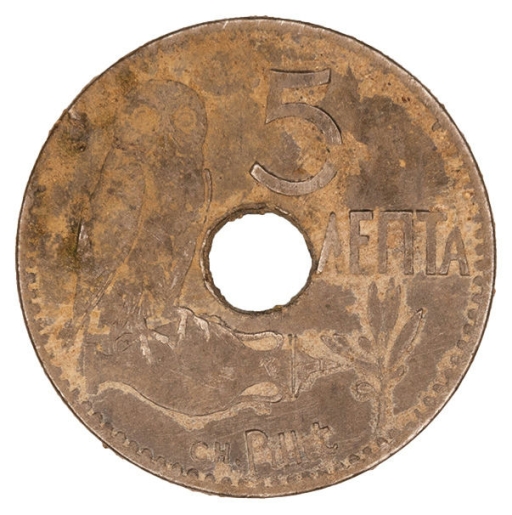
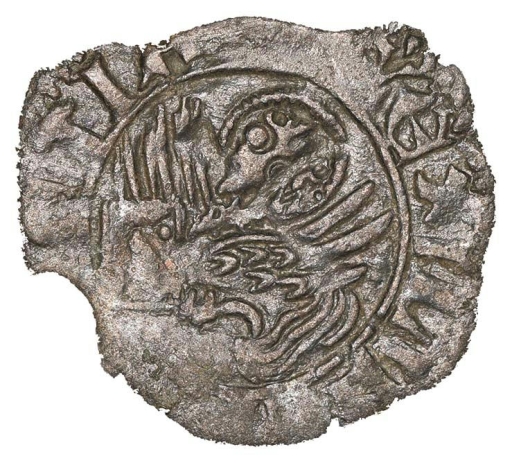
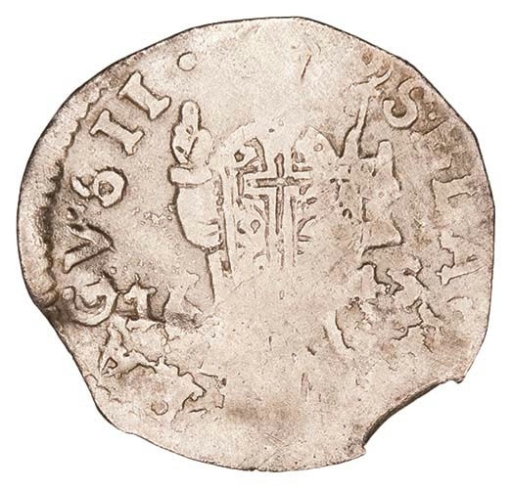
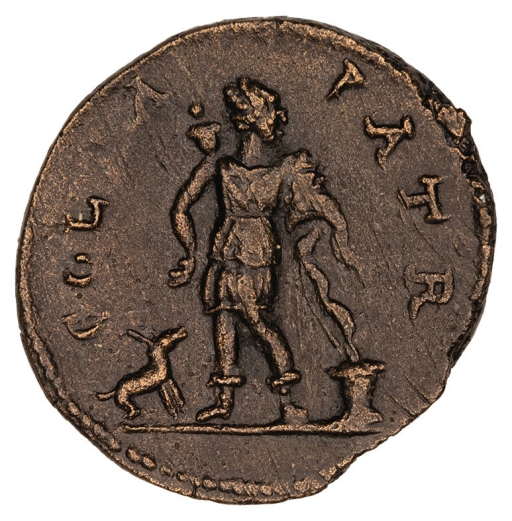
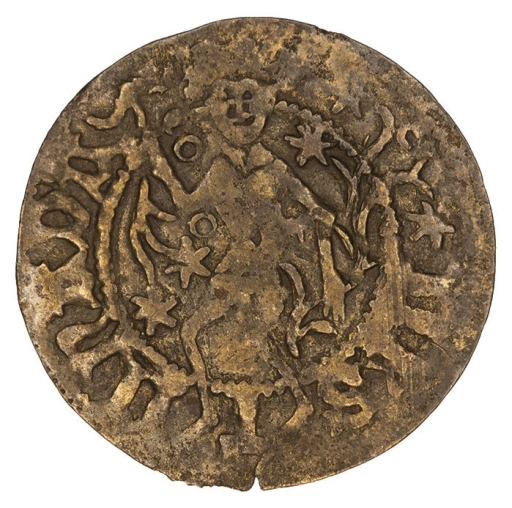
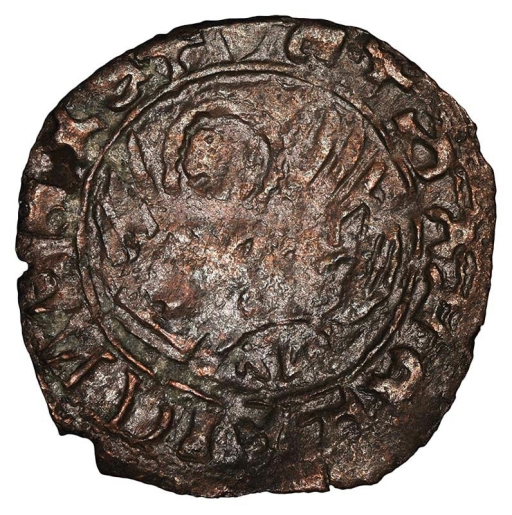
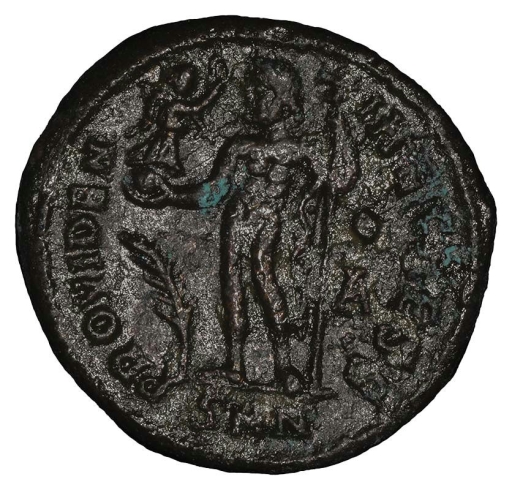
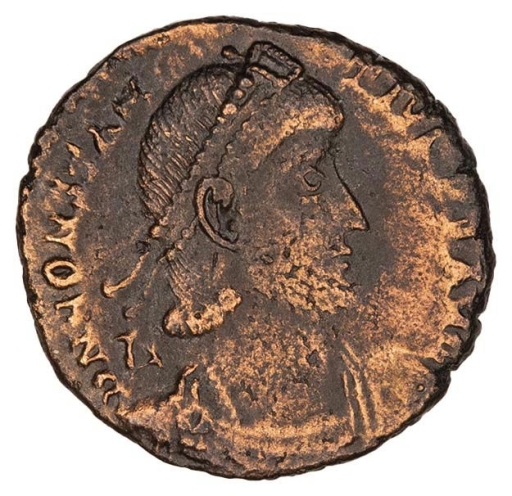
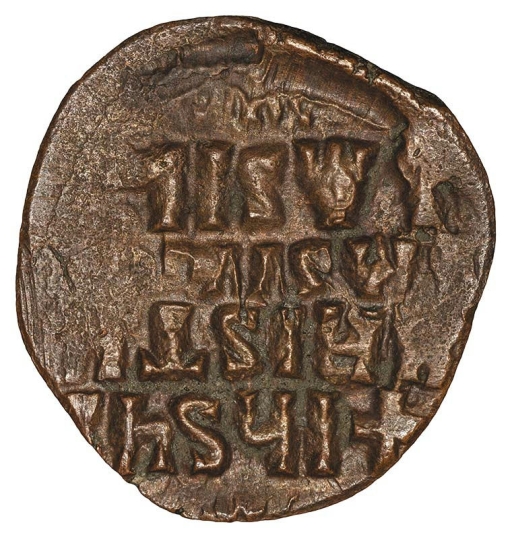
In 1967, Professor Paul Clement and the University of California Los Angeles assumed leadership and sponsorship of the UCLA Excavations at Isthmia. Over the next two decades, he directed fieldwork in three main areas of the site: the Byzantine era fortifications, the Roman period bath, and a complex of buildings to the east of the Temple of Poseidon. Excavation in these locations produced a large collection of coins, including deposits that appear to date to the unrest of the 4th century and the possible end of traditional activities at the panhellenic sanctuary. Over his tenure as director at Isthmia, Prof. Clement worked to assemble this numismatic evidence into a comprehensive catalog which now forms the core of a larger collection of coins from Isthmia. Sadly, since his death in 1986, Clement’s catalog has remained in an incomplete and unpublished state. This open access repository of coins and the evidence of their archaeological context is here presented as a celebration of Clement’s work, while the full corpus of numismatic material is being prepared for publication.
To see each of the coins with their associated information, select a menu option from the “Browse the Collection” link above.
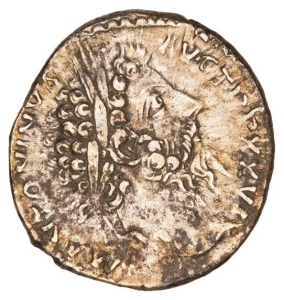
The coins in the Clement Catalog and at Isthmia more generally, are presented here as part of a broader effort to make archival and legacy materials accessible to scholars and the general public. These materials have been recovered and documented over multiple decades of excavation by teams from UCLA, the Ohio State University, and the University of Chicago. In particular, the Clement Catalog was examined and updated by Dr. R. Ross Holloway and Dr. Liane Houghtalin. It has most recently been examined and edited by Dr. Michael Ierardi.
The actual coins have been treated by professional conservators to reverse the effects of corrosion to the copper alloys, commonly known as “bronze disease,” and are now stored in a cool, dry location in the storage rooms of the Isthmia Museum and MSU Excavations at Isthmia.
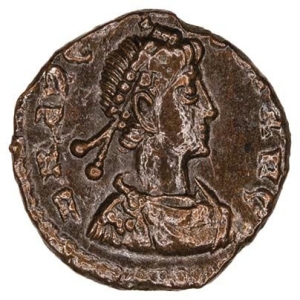
Each coin is photographed individually using a high-resolution digital camera mounted on a copy stand. The setup includes directional lighting to highlight inscriptions, relief details, and surface textures. Both the obverse (“heads”) and reverse (“tails”) of each coin are photographed at the same focal length and within the same frame, so that the resulting images can be most easily presented at the same size and scale.
The resulting digital file, is stored in TIFF format on primary and back up hard drives. This digital image is then masked to separate the coin from its background visually, and adjusted for clarity and lighting. Then it is saved again as a JPEG file in order to improve the speed of display over the internet. Care is taken to ensure the that name of the digital file matches the number of the coin in the excavation catalog.
Student researchers and interns then transcribe the associated notes—originally recorded by excavation directors and trench supervisors—into a spreadsheet format. These notes may include context information, find location, coin type, or preliminary identification.
The digital records are cross-checked with field notebooks and excavation logs to ensure consistency. Metadata such as excavation year, trench, and descriptive tags are standardized to improve searchability. The final data is uploaded to an online archive, where it can be browsed excavation context, chronological period, etc.
Backups of both original and edited images are saved to secure cloud storage maintained by Michigan State University and additional drives for preservation purposes.
This methodology reflects an ongoing commitment to stewarding archaeological resources while expanding access to the research community and the public.
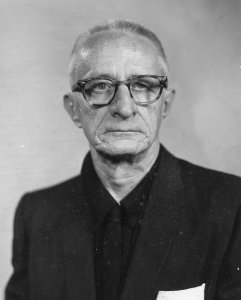
Paul Augustus Clement’s expertise and incisive knowledge covered an unusually broad spectrum that included Greek literature, epigraphy, numismatics, mythology, Greek vase painting, and archaeological fieldwork. A pupil of David M. Robinson at Johns Hopkins University, Clement became his colleague in his first publication, part of the vast report of the Hopkins excavation at Olynthus. The work reconstructed the history of the mint in Chalcidice and catalogued the coins found in the excavations, with a long section on the chronology of the city; Clement returned to the topic in a later paper. His other major contribution is his volume in the Corpus Vasorum Antiquorum (CVA), done with his student Pamela Packard, on the Greek vases in Los Angeles. His philological publications were fewer but include his graceful and accurate translation of part of Plutarch’s table-talk. His first academic position, at William and Mary, was wiped out by the Great Depression. Clement recalled that, after his personal discovery of Greece in the 1930s, he resented every minute that he did not spend there. And indeed his major legacy to knowledge will probably be the reports of the excavation he organized and directed at Isthmia. The most spectacular find here was a large mosaic in the Roman bath. In his preparation of this catalog of Isthmian coins, he returned to the field of his first publication; thus his scholarly career came full circle. His heavy smoking contributed to emphysema, which partly disabled him in later years and prevented his seeing to the planned volumes of reports.
Clement worked loyally at UCLA, presiding over the local department during part of its transformation from a provincial teaching department into a center of national reputation. He was an awe-inspiring but stimulating teacher, and an exacting friend and colleague. An inimitable Southern elegance was paired with dignified manners and a passion for precision in language and scholarship. The latter quality made him especially suitable for the task as editor of publications of the ASCS in Princeton, a position where he exerted lasting influence: he supervised the journal Hesperia and such great works as the Athenian Tribute Lists by Merritt, Wade-Gery, and McGregor. Clement was a figure out of Wagner, tall, gaunt, with a lined face and Roman nose. The most generous of hosts, he delighted in holding court, with a party of the young, at a lavish dinner under the trees at his favorite French restaurant in his beloved Athens.
—Adapted from Wohl, Birgitta and Chambers, Mortimer: Database of Classical Scholars