
2026 Season Report
The 2026 season of the Michigan State University Excavations at Isthmia took place from 12 May to 10 July and relied on the efforts of the following individuals:
- Alexis Alore: Michigan State University
- Divija Anuga: Michigan State University
- Johanna Aquilina: Michigan State University
- Shelly Beach: Michigan State University
- Marissa Camporesi: Michigan State University
- William Caraher: University of North Dakota
- Eleanor Connick: Michigan State University
- Hadley Detter: Michigan State University
- Sarah Eubanks: Michigan State University
- Jon M Frey: Michigan State University
- Theodore Frey: Lansing Catholic HS
- Timothy Frey: Lansing Catholic HS
- Allison Ham: Grand Valley State University
- Brad Johnson: Davidson College
- P. Nick Kardulias: Youngstown State University
- Drosos Kardulias: University of Michigan
- Theodora Kouknakou: Hellenic Open University
- Ulrike Krotscheck: Evergreen State College
- Matthew Lahti: Michigan State University
- Sierra Lamphier: Michigan State University
- Augustin Millet: Trinity College
- R. Scott Moore: Indiana University of Pennsylvania
- Ari Mullett: Michigan State University
- Elpida Ntriva: University of Patras
- Eliza Piper: Michigan State University
- Kayla Pleysier: Michigan State University
- Martha Risser: Trinity College
- Isaac Rothaus: Central Michigan University
- Richard Rothaus: Central Michigan University
- Charlie Sailor: Michigan State University
- Harrison Sanders: Michigan State University
- Emmalyn Seelye: Michigan State University
- Kaitlyn Silengo: Michigan State University
- Lillian Stauffer: Michigan State University
- Daniel Trego: Michigan State University
- Noah Turner: Trinity College
- Susannah Van Horn: Michigan State University
- Akis Venitsanos: Kyras Vrysi
- Caleb Xiang: Michigan State University
- Claire Zurowick: Michigan State University
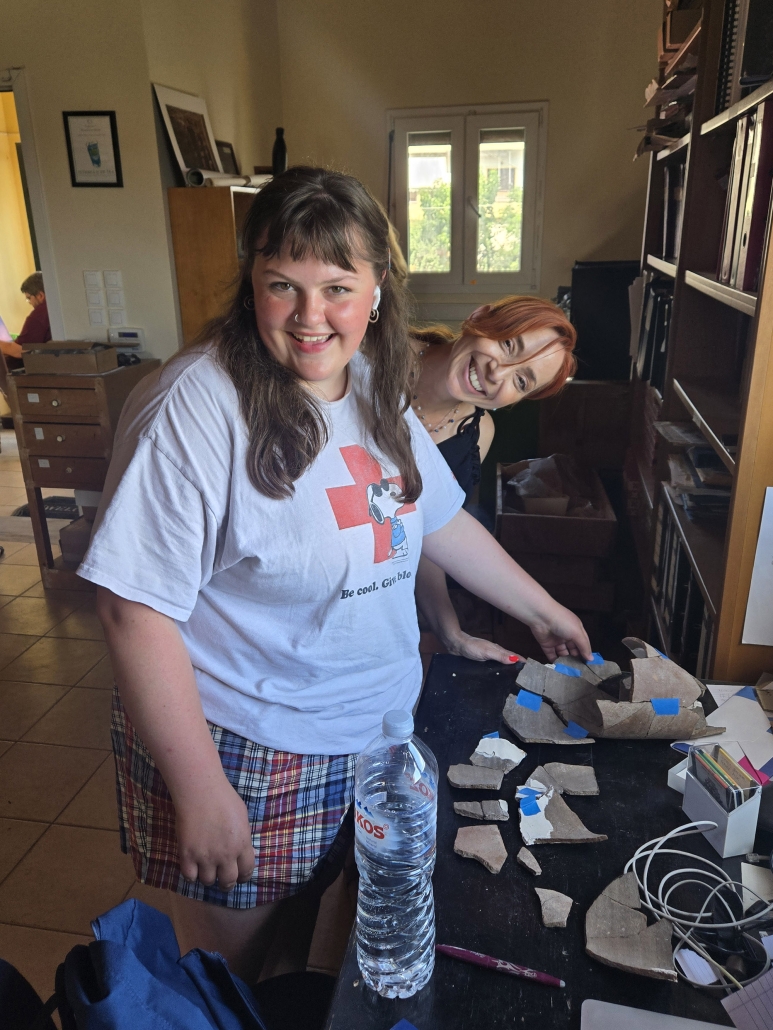
Shelly Beach and Angeliki Kandri work on mending an amphora.
Fieldwork
Having completed permitted fieldwork in 2025, this season was dedicated to study of previously discovered artifacts and monuments. At the same time, the team engaged in the annual activity of maintaining the standing remains of the Roman Bath.
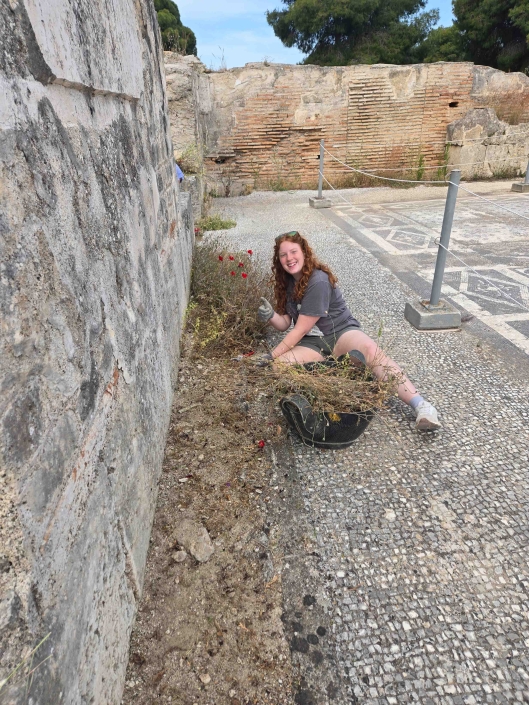
Clearing annual growth of weeds from the Roman Bath.
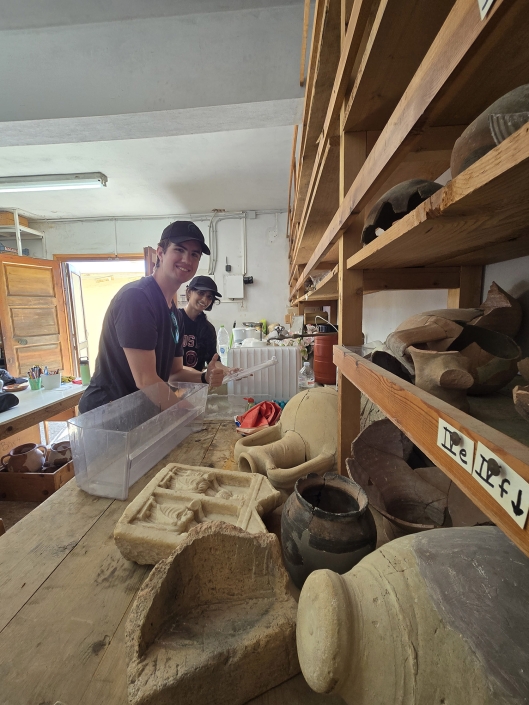
Working on organizing the dig house.
Research
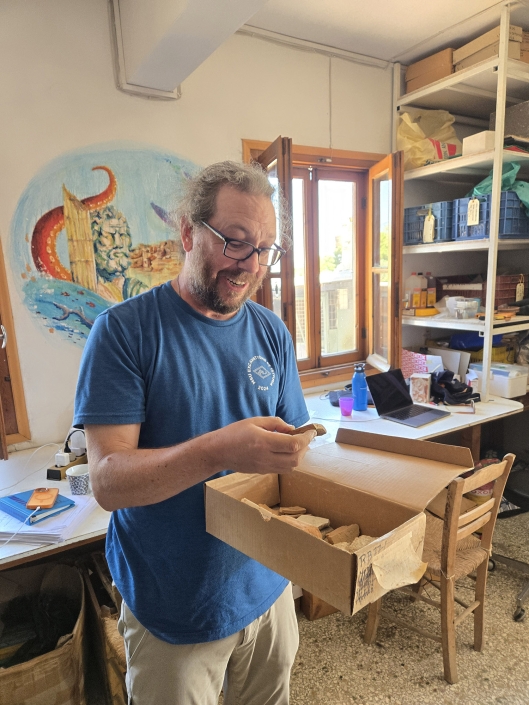
Re-discovering ceramic evidence in storage.
Much more activity took place in the storerooms and archives of the project. Two scholars engaged in week-long investigations of the site to evaluate the suitability of the evidence for future study. In May Allison Ham (GVSU) examined the skeletal evidence from burials excavated in the 1960s and 1970s. In June, Brad Johnson (Davidson College) surveyed the landscape in preparation for a possible analysis of the local geomorphology.
Research continues on the evidence from the rescue excavations that took place to the west of the site 1968-1970. The catalog of graves and grave goods from the West Cemetery nears completion and Ulrike Krotscheck (Evergreen State College), Martha Risser (Trinity College) and Joseph Rife (Vanderbilt University) now pivot toward submission of a full publication of this important burial site.
Likewise, William Caraher (Univ. N Dakota), R Scott Moore (IUPUI) and Richard Rothaus (Central Michigan University) continue their study of the later Roman and Byzantine evidence from the Roman Bath and Fortress. This research project, which began as a study of the 6th-8th century ceramic evidence (the “Slavic” wares), has new developed into a critical examination of the evidence for the post-classical phases of the Roman Bath.
Storage and Archives
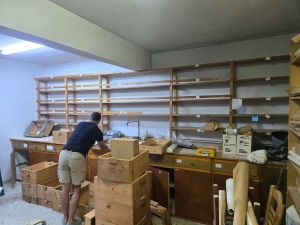
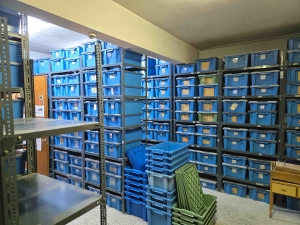
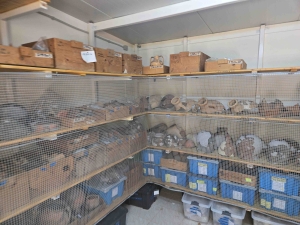
The back room of the “dig house” before (left) and after (center) renovation. The “kouzina” (right) now hold all cataloged ceramic artifacts.
The digitization of the documents and images in the excavation archives continued this year. As in the past few years, the large collection of black and white negatives remain a significant focus of this effort. At the same time, photographic and 3D recording of objects from past excavations also received attention. It is expected that this and other digitized evidence will be made available online before the end of the calendar year.
In addition, significant effort was focused on a near-complete renovation of the storage facilities of the excavation. This began with the disassembly and removal of the wooden cabinets and shelving in the back room of the “dig house.” Following repairs to the stucco walls and a rerouting of utilities, new shelves were built into the renovated space. The improved storage allowed all context pottery from the UCLA phase of the project to be stored in this location. Context material from the OSU phase of fieldwork was then shifted to the “apotheke Gregory.” Finally, all cataloged ceramic vessels were organized (perhaps for the first time since the 1970s!) on the shelves of the “kouzina” storeroom.
In addition, context pottery that had been stored in repurposed metal boxes in a covered outdoor shed was integrated into this new storage system. Now only the cataloged architectural elements remain to be moved to these improved facilities.
Education
The project continues to fulfill its educational mission by serving as host to study abroad programs and internship projects. In May, students in design from MSU focused on archaeology as a set of user experience and design challenges that can be overcome through the application of creative digital solutions. In June, a second group of students from MSU combined study of artifacts at Isthmia with creative work at the nearby Global Arts Studio and collaboration with contemporary Greek artists to come to a better understanding of the importance of ceramic art in antiquity and today.
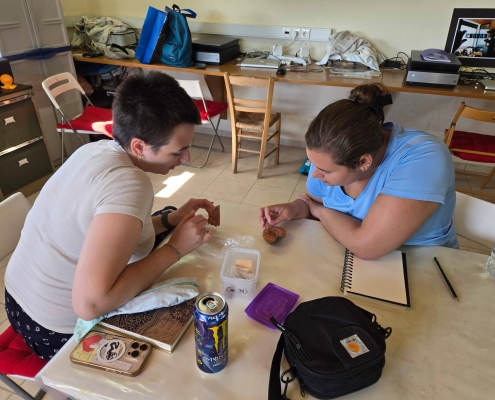
Students from the Ceramic Arts in Greece program examine a lamp.
Outreach
Finally, this season, the MSU team launched a project designed to engage with children and families who visit the site. The “dolphin search” asks children to locate small plastic toy dolphins at various parts of the site. When one is located, they record its name on a laminated map that is distributed at the museum. When they return to the museum with the names of the dolphins, they receive a small prize. It is hoped that this activity will engage younger visitors while adults tour the site.
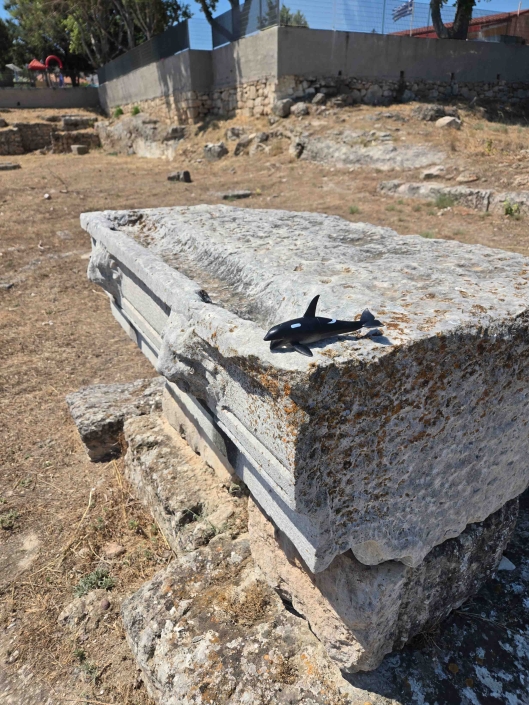
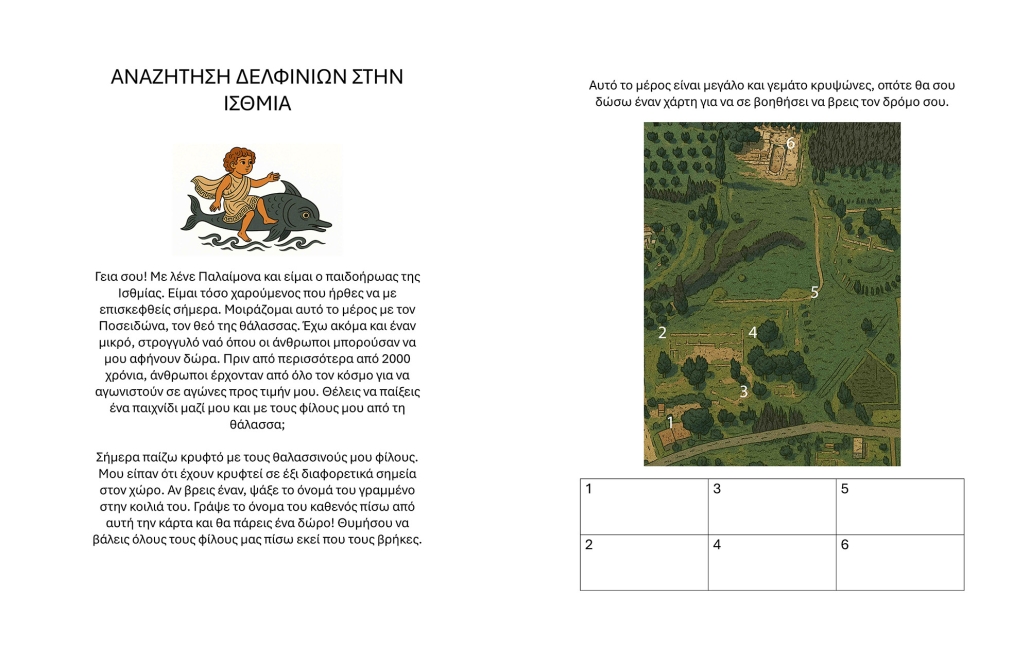
A toy dolphin (left) and the instructions and map (right) for the Isthmia Dolphin Search game.